The web development landscape in 2026 has transformed dramatically. With AI baked into every layer of the stack and edge infrastructure pushing performance to new heights, developers and businesses must adapt or risk falling behind. Here are the most impactful trends shaping modern web development.
1. AI-Assisted Development & Generative UI
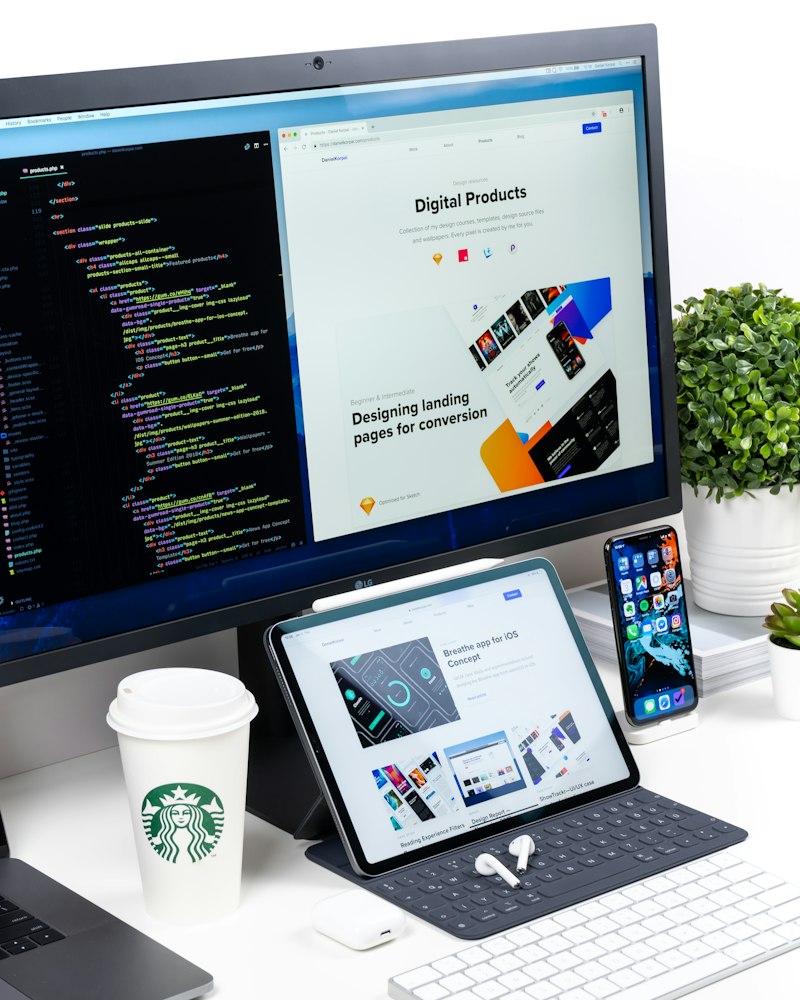
AI coding assistants are no longer novelties — they're core to the development workflow. Tools like GitHub Copilot, Cursor, and AI-powered design-to-code platforms allow small teams to ship production-quality products at the pace of large enterprises. Generative UI — where interfaces are dynamically composed based on user context — is entering mainstream adoption through frameworks like Vercel's AI SDK.
The key takeaway: developers who leverage AI multiply their output 3–5x. Those who don't will find themselves priced out of the market.
2. Edge Computing & Regional CDN Dominance
With global audiences demanding sub-100ms load times, edge computing has moved from optional to essential. Deploying compute and data at the edge — closer to users — via platforms like Cloudflare Workers, Vercel Edge Functions, and AWS Lambda@Edge means performance that was once only possible for Google-scale companies is now accessible to startups.
- Edge-rendered React Server Components for instant navigation
- Distributed SQLite databases (Turso, D1) replacing centralized databases for read-heavy workloads
- Edge-native authentication removing cold-start latency in login flows
- Regional data residency becoming a compliance requirement, not just a performance optimization
3. The Return of Full-Stack Simplicity

After years of microservices complexity, the industry is swinging back toward full-stack simplicity. React Router v7, Remix, and Next.js 15 all lean heavily into the server/client co-location model — write one component tree, let the framework decide what runs where. This dramatically reduces the overhead of coordinating separate frontend and backend teams.
4. WebAssembly Goes Mainstream
WASM is finally delivering on its decade-long promise. With the WASI standard maturing and languages like Rust, Go, and Python compiling to WASM with near-native performance, we're seeing it power everything from in-browser video editing to server-side plugins in databases. If your product involves computationally intensive tasks in the browser, WASM is worth evaluating seriously in 2026.
5. Accessibility & Inclusive Design at the Forefront
Regulatory pressure (EU Accessibility Act enforcement began in 2025) combined with AI-powered audit tools that catch WCAG violations automatically has made accessibility a genuine priority. Companies that built inaccessible products are facing real fines — and more importantly, are losing customers. Modern design systems now bake in accessibility primitives from the start.
Web development in 2026 rewards those who embrace AI augmentation, edge-first architecture, and accessibility as a core principle. The barrier to building world-class products has never been lower — but the bar for what users expect has never been higher. The teams that win are those who treat technology choices as business decisions.

Mohammed Al-Farsi
CEO & Founder — Fixed Arrow
Digital strategy & technology expert helping businesses grow through smart solutions.